




In contemporary organizational environments, leadership failures rarely stem from a deficiency in technical intelligence, strategic competence, or industry expertise. Instead, the critical point of failure almost always occurs when pressure enters the room. As workplace demands escalate, market conditions shift, and personal stressors bleed into professional spaces, unexamined emotional reactions threaten to override rational decision-making.
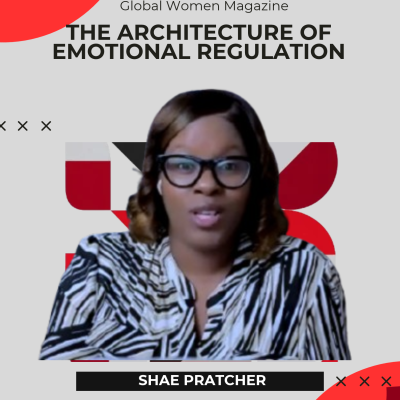
In an exclusive conversation on the UPSURGE! podcast, host Evelyn sits down with author, global speaker, and executive coach Shea to examine how emotional regulation dictates organizational culture and executive influence. Drawing from over twelve years in corporate America alongside profound personal therapy and reflection, Shea highlights a fundamental truth: knowledge determines what leaders know, but emotional regulation governs what they actually do when challenged. When executives react out of unexamined impulse, defensive behaviors ripple across teams, eroding organizational trust, fracturing client relationships, and establishing toxic cultural norms. Transforming leadership performance therefore requires closing the gap between aspirational values and real-time behavioral choices under stress.
Tending to the Root: Behavior as the Fruit, Belief as the Root
Traditional professional development frequently focuses on managing surface-level symptoms—coaching managers to apologize after snapping in high-stakes meetings or admonishing professionals who retreat into passive compliance. However, Shea argues that treating behavioral outputs without addressing internal beliefs is an exercise in futility, captured in a central paradigm: behavior is the fruit, but belief is the root.
| Dimension | Primary Focus | Common Workplace Symptoms | Strategic Intervention |
| Behavioral Output (The Fruit) | Surface-level reactions and external actions | Snapping under stress, passive silence in meetings, saying yes while feeling no | Apologies, damage control, temporary behavioral suppression |
| Internal Conviction (The Root) | Core beliefs, unexamined trauma, and implicit assumptions | Fear of inadequacy, defensiveness, belief that mistakes forfeit authority | Deep self-reflection, therapy, structural emotional regulation |
Just as a gardener cannot fix an unhealthy harvest by shaming the fruit, executive leaders cannot build sustainable cultures by merely polishing surface behaviors. Professionals continuously spend energy apologizing for reactive fruit while leaving the subterranean belief system unattended. Because individuals consistently behave the way they believe, long-term leadership transformation requires investigating the implicit assumptions and internal narratives that trigger reactive patterns under pressure.
The Power of the Pause: Recognize, Regulate, and Reset
The space between an emotional trigger and a leadership decision represents a critical gap. Society conditions professionals to believe that every inquiry, confrontation, or crisis demands an instantaneous response. Normalizing the “power of the pause” creates the necessary cognitive boundary to convert impulsive reactions into intentional choices.
Shea outlines a three-stage internal protocol designed to operate in real time without creating dramatic disruptions in workplace settings:
- Recognize Physical Triggers: Emotional stress manifests physically before it registers consciously. Leaders must learn that if they can name the physical response—whether ears burning, chest tightness, or stomach tension—they can begin to tame it.
- Regulate Internally: Rather than engaging in disruptive stress-relief practices during a meeting, leaders execute subtle internal grounding. Placing feet flat on the floor and practicing controlled breathing (inhaling for four counts, exhaling for six) lowers physiological arousal discreetly.
- Ask the Quiet Question: To dismantle immediate defensiveness, leaders pose an internal inquiry: “What if there’s something true here?” Because curiosity inherently disarms defensiveness, this simple reflection shifts the brain from a protective posture to an analytical, receptive state.
The CLARIFY System: Seven Disciplines for Intentional Leadership
To bridge the gap between knowing better and doing better in corporate environments, Shea developed the CLARIFY System—a framework comprising seven distinct operational disciplines designed to govern communication, accountability, and organizational focus.
| Discipline | Strategic Imperative | Operational Execution |
| C — Clarity | Eliminate assumption-driven miscommunication | Actively ask probing questions to uncover root expectations rather than relying on unverified assumptions. |
| L — Listen | Practice “Lucid Listening” without distortion | Filter out defensive impulses to hear exactly what is being communicated rather than preparing a counterargument. |
| A — Adjust | Adapt posture to new information | Flexibly modify behavioral approaches when presented with clarifying facts, overcoming cognitive rigidity. |
| R — Reset | Re-anchor attitude and emotional tone | Execute an internal emotional reset following friction to prevent residual resentment from clouding future interactions. |
| I — Integrity | Separate Intent from Impact | Recognize that positive intentions do not negate negative impact; take full ownership of outcomes regardless of motive. |
| F — Focus | Concentrate on primary strategic outcomes | Channel energy into what matters first and fully amidst competing priorities, noise, and digital distractions. |
| Y — Yield | Master the discipline of letting go | Relinquish outdated processes, mindsets, and legacy beliefs to intentionally pivot when organizational change demands it. |
A pivotal component of the CLARIFY model lies in the distinction between intent and impact within the Integrity discipline. Leaders frequently hide behind good intentions when their actions cause organizational harm. Demonstrating true executive integrity requires holding two truths simultaneously: acknowledging that while an action was not intended to cause offense or disruption, its operational impact was nonetheless real and requires accountability.
Breaking Generational Cycles and Becoming the Blueprint
Personal history inevitably informs professional leadership. Shea notes that her framework emerged from navigating severe childhood trauma, enduring fifteen months of intensive therapy between 2021 and 2022, balancing a twelve-and-a-half-year corporate career, and navigating the profound loss of her firstborn son to Trisomy 13.
Transforming personal adversity into executive self-awareness requires rejecting the passive acceptance of legacy patterns. Many leaders express a desire for healthier workplace cultures yet continue replicating the punitive or reactive behaviors modeled by prior generations of management. Breaking institutional or familial cycles requires adopting the philosophy that “it is what it is until you do something different.” Leaders who aspire to shift culture must be willing to serve as the blueprint—accepting the discomfort of behavioral change, establishing personal discipline, and modeling emotional regulation for their organizations.
Strategic Conclusion: Stop, Settle, or Step
When confronted with continuous organizational pressure and inescapable industry change, leaders inevitably choose one of three operational pathways:
- Stop: Forfeit strategic goals, abandon long-term aspirations, and surrender to external pressure.
- Settle: Accept current friction as permanent, accepting suboptimal performance and cultural stagnation as as good as it gets.
- Step: Pivot on purpose, embrace structural discipline, and intentionally move forward despite pressure and ambiguity.
Sustainable executive influence belongs to those who choose to step forward. By mastering the power of the pause, cultivating the CLARIFY disciplines, and tending to foundational beliefs, female leaders convert daily pressure into an instrument for personal legacy and organizational health.

Similar Deep Dives
Building Global Influence, Growth, and a Seat in Entertainment