
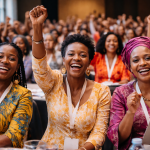

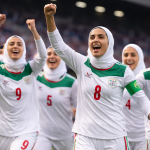


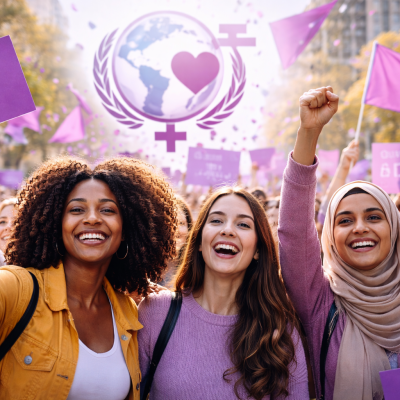
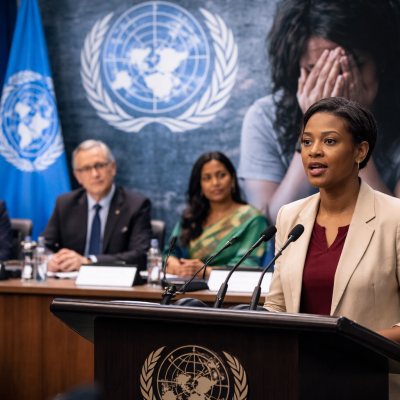
UN Women has renewed calls for greater representation of women in global media, warning that women account for only about 26 percent of media coverage worldwide—a disparity that continues to sideline women’s voices, leadership, and lived realities in public discourse.The agency’s findings underscore a persistent imbalance in how stories are told and whose perspectives are considered authoritative. While women lead governments, drive economies, shape culture, and anchor communities, they remain significantly underrepresented as subjects, experts, and narrators in news reporting. The result, UN Women cautions, is a distorted public record—one that reinforces narrow definitions of power and expertise.According to the agency, increasing women’s visibility in media is not merely a question of fairness but of accuracy. When women are excluded from storytelling, entire dimensions of social, political, and economic life are overlooked, weakening public understanding and policy responses alike. UN Women is urging media organizations to commit to gender-balanced sourcing, inclusive editorial leadership, and deliberate amplification of women’s voices across beats—not only during moments of crisis or celebration.From our perspective, the 26 percent figure is not just a statistic; it is evidence of how influence is quietly rationed. Media does not simply reflect reality—it shapes it. When women are consistently framed as secondary characters rather than central actors, their authority is subtly undermined, regardless of their actual impact.What makes this imbalance especially concerning is its cumulative effect. Limited visibility today translates into limited legitimacy tomorrow. If women are not seen as experts, leaders, or decision-makers in media narratives, it becomes easier for institutions to overlook them in boardrooms, parliaments, and policy tables.The call from UN Women is ultimately a call to redesign narrative power. Representation must move beyond token inclusion toward structural change in who assigns stories, who is quoted, and whose experiences are treated as universal. Until then, the global story will remain incomplete—missing the voices of half the world.Visibility is not vanity. It is power. And power, once named, can be redistributed.
Other Articles
Pervasive Sexual Misconduct in Elite UK Sport

No Comment! Be the first one.