




News Desk: Global Policy & Governance
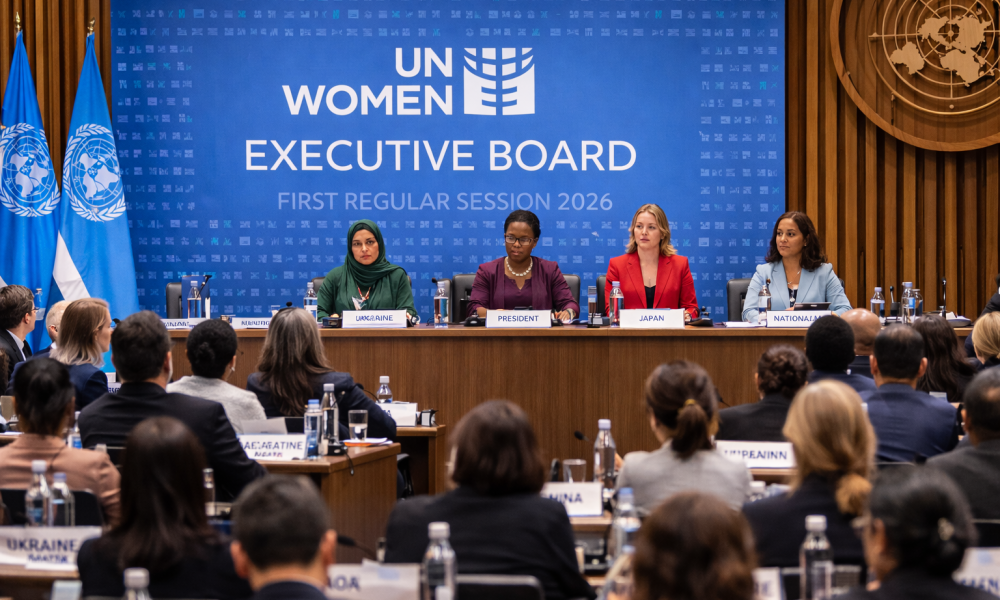
The UN Women Executive Board convened its first regular session of 2026 this week, outlining strategic priorities that will shape global gender equality and women’s empowerment efforts throughout the year.
During the session, Member States reviewed programmatic frameworks, budget allocations, and operational targets aimed at advancing women’s rights across political participation, economic empowerment, peace and security, and humanitarian response. The meeting also addressed accountability mechanisms and partnership strategies designed to ensure that commitments translate into measurable outcomes.
Central to discussions was the allocation of financial and technical resources for women-focused initiatives worldwide. Delegates emphasized the need for sustainable funding models, stronger data systems, and cross-sector collaboration to accelerate progress toward global gender goals — particularly in regions facing conflict, climate disruption, and economic instability.
Board members also reinforced the importance of aligning national gender strategies with international frameworks, ensuring coherence between policy ambition and implementation. As 2026 unfolds, UN Women’s leadership signaled that institutional coordination and evidence-based programming will remain core pillars of its work.
The session sets the tone for the year ahead, framing gender equality not as a standalone objective but as foundational to economic growth, democratic stability, and sustainable development.
At Global Women Magazine, we view this session as a reminder that gender equity is shaped as much in boardrooms and policy chambers as it is in communities and movements.
Global priorities matter — but execution matters more.
When institutions like UN Women refine resource allocation and strategic direction, they influence national budgets, civil society partnerships, and international development pipelines. These decisions ripple outward, affecting education systems, workplace protections, political representation, and access to capital for millions of women and girls.
However, the gap between policy commitment and lived experience remains a persistent challenge. The real test of 2026 will not be the clarity of priorities, but the consistency of implementation and the courage to address systemic barriers.
Gender equality is not a peripheral agenda. It is infrastructure for global stability. The Executive Board’s work this week reinforces a critical truth: sustainable progress for nations is inseparable from sustained investment in women.






No Comment! Be the first one.