



Organisations around the world are ramping up activities ahead of International Women’s Day 2026 on March 8, with a significant push from public health and global governance institutions emphasizing the theme “Rights. Justice. Action. For ALL Women and Girls.”
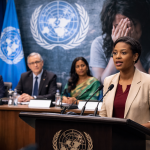
This week, the World Health Organization Regional Office for Europe (WHO/Europe) announced an online event tied to International Women’s Day that will focus on women’s health equity and systemic barriers affecting women and girls across the life-course. The virtual session will explore persistent health inequalities shaped by social, economic, cultural, and environmental factors, and is positioned as a high-level webinar to assess progress and mobilise coordinated action.
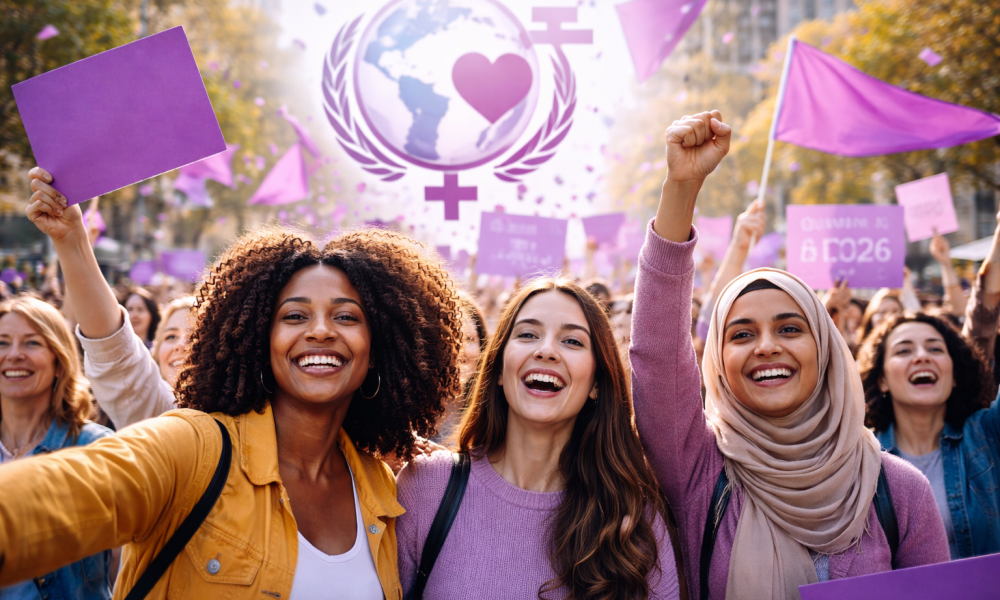
Separately, global planning for the March 8 observance is gaining momentum, with organisations and movements preparing rallies, marches, webinars, and solidarity campaigns that align with the same 2026 theme. This coordinated effort reflects broad recognition that rights and justice for women must be reinforced through collective action, legal protections, and policy reform, not merely commemorative activity.
The theme itself, “Rights. Justice. Action. For ALL Women and Girls,” highlights enduring gaps in legal protections and access to equal rights around the world. Advocates note that, despite progress, women still experience discrimination across fundamental areas including work, money, safety, mobility, and family law; underscoring the need for sustained policy change and enforcement.
At Global Women Magazine, we view this early coordination not as ceremonial lead-up, but as strategic signalling: institutions are using International Women’s Day to set the policy agenda for the year ahead.
Themes like rights, justice, and action matter because they anchor the conversation in systemic reform, not symbolic observance.
Health equity, legal protections, and structural accountability are not fringe points, they are central to achieving measurable gender parity.
The real measure of this week’s planning will not be how many events occur, but whether discourse transforms into institutional commitment; tangible policies, enforcement mechanisms, and funding streams that uphold women’s rights and well-being far beyond March 8.
International Women’s Day is a moment. But justice and equality must be infrastructure; built into systems, budgets, and the law itself.

No Comment! Be the first one.