





Nobody hands you influence. You build it.
That’s something most women figure out the hard way, usually after watching someone considerably less qualified walk into a room and immediately command it, or after doing the actual work that moved an entire organization forward and finding their name somewhere around page four of the acknowledgements. Influence, we learn, is not a reward for competence. If it were, we’d all be running everything by now.
The good news is that women are extraordinarily good at building influence deliberately. We just haven’t always been encouraged to see it that way. We’ve been too busy doing everyone else’s work.
The Influence Gap Isn’t About Confidence
We have been told for decades that the reason women don’t hold more power is that we don’t put ourselves forward enough. We’re too hesitant, too collaborative, too focused on doing the work rather than being seen doing it. The solution offered is always some version of the same advice: speak up more, take up more space, be more like the men who seem to move through organizations without friction, and apparently without ever sending a follow-up email.
This advice is not only exhausting. It is wrong.
The research increasingly tells a different story. Women are not lacking in confidence. We are operating in environments that are structurally designed to route influence away from the way we naturally lead. Organizations reward the performance of authority more than the practice of it. They conflate volume with vision. They mistake visibility for value. They have, in short, confused “loudest” with “best” for quite some time, and the results are all around us.
So the question isn’t how we become more like the leaders who already have power. The question is how we engineer influence in a way that works with who we are, and how we build enough of it to actually change things.
Start With Relationships, Not Reputation
Here’s what the most influential women I know have in common, they invested in relationships long before they needed them.
Not networking in the transactional, business-card-exchanging sense. Real relationships, built on genuine curiosity and reciprocity. They knew what mattered to the people around them. They remembered. They showed up when it wasn’t strategic. They sent the thoughtful message at the right moment, not because it was on a to-do list but because they actually paid attention to people.
This is not soft. It is structural. A reputation tells people who you are. Relationships give people a reason to act on it.

The women who engineer influence well, understand that trust is the actual currency of power in any organization or community.
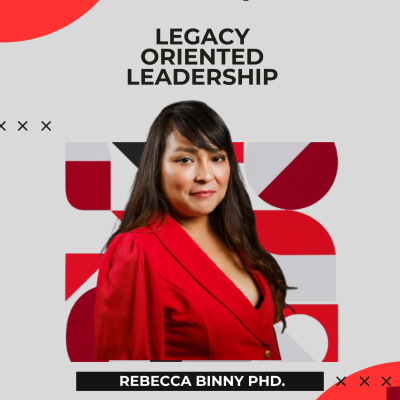
-Rebecca Binny
Titles can be assigned and removed. Access can be revoked. But trust, built carefully over time across many relationships, is genuinely hard to take away. It also, unlike most things in organizational life, tends to accumulate interest.
Be Deliberate About What You’re Known For
Influence requires a clear signal. If people can’t articulate what you stand for and what you’re exceptional at, you won’t be the person they think of when an opportunity arises, or a decision needs to be made. You’ll be the person they think of when they need someone reliable to take notes.
This is where many women undersell themselves, not because they lack the substance, but because they’ve been taught that self-promotion is distasteful. So they let their work speak for itself. And in loud, crowded organizations, work that doesn’t have a voice rarely gets heard. It does, however, occasionally get credited to someone else entirely, which is a special kind of fun.
The reframe is to stop thinking of visibility as self-promotion and start thinking of it as information. The people in your organization or industry need to know what you know, what you can do, and what you care about. Sharing that clearly and consistently isn’t arrogance. It is useful. It makes you findable for the right things.
Be intentional about the two or three things you want to be known for. Talk about them. Write about them. Build a track record around them. Let your point of view be visible enough that people can connect with it, agree with it, occasionally argue about it at conferences. All of that is influence working.
Use Your Room to Bring Others In
One of the most powerful things women do, and one of the things that tends to be dramatically undervalued, is use whatever influence they’ve accumulated to create space for others.
This is not altruism, though it is also that. It is how influence compounds.
When you amplify another woman’s idea in a meeting, credit her by name, bring someone into a conversation they wouldn’t otherwise have been part of, or open a door because you remember what it felt like when someone opened one for you, you are doing two things at once. You are building genuine goodwill and loyalty in your network. And you are signalling, to everyone watching, that you are someone who makes the room better.
The leaders who are most deeply influential over time are almost never the ones who hoarded access. They are the ones people genuinely wanted to follow because being around them meant being lifted. Turns out people remember that. For a very long time.
Feminine Leadership Is Not a Liability. It’s the Blueprint.
For a long time, the qualities most associated with feminine leadership were framed as nice-to-haves at best, weaknesses at worst. Empathy. Emotional intelligence. Collaboration. Intuition about people. The willingness to ask questions rather than perform certainty. These were tolerated in women who were otherwise impressive enough to survive in spite of them, which says quite a lot about the rooms those decisions were made in.
That framing is changing, because the evidence has become too loud to ignore. The organizations that navigated the pandemic most effectively were disproportionately led by women. The teams with the highest psychological safety, the ones that actually innovate and retain people, tend to be led by people who listen well and make others feel seen. Remarkable, that.
Empathy is not the opposite of strategy. It is a form of intelligence that lets you anticipate how decisions will land, where resistance will come from, and what people actually need versus what they say they need in meetings. That is enormously useful if you want to move anything forward, which is generally the point.
Collaboration is not the absence of decisiveness. It is a method of building the kind of broad buy-in that makes implementation faster and outcomes stickier. Decisions made collaboratively are owned more widely, which means they survive contact with reality far better than the ones handed down from on high by a single visionary who didn’t consult anyone.
The willingness to be emotionally present, to name what’s happening in a room, to acknowledge difficulty rather than paper over it, builds the kind of trust that is almost impossible to manufacture any other way.
These are not soft skills. They are precision tools for engineering influence. And women who have been practicing them their whole careers are sitting on a competitive advantage that the leadership world is only just beginning to understand. We’ve been ahead of the curve the whole time. We just weren’t told.
The work now is to stop apologizing for leading this way and start naming it for what it is: sophisticated, effective, and exactly what this moment requires.
Know the Difference Between a Seat and a Voice
Getting a seat at the table is necessary. It is not sufficient. Anyone who has sat in a room and watched their idea get ignored, only to be praised enthusiastically when a colleague restated it eleven minutes later, knows this intimately.
Too many women have fought hard for access and then found themselves in rooms where their contributions are talked over, attributed to someone else, or acknowledged briefly before the conversation moves on. The seat matters. But what you do in it matters more.
Engineering real influence means learning to make your voice land. That is partly about timing, knowing when to speak and when to let others fill silence. It is partly about framing, understanding that the same idea can be dismissed or adopted depending on how it enters a room. And it is partly about persistence, being willing to say a thing more than once, in more than one way, until it takes hold. Repetition is not stubbornness. It is strategy.
It also means being willing to name what is happening when your voice isn’t landing. Not every time, not in every room. But selectively, clearly, and without apology. Women who become genuinely influential have usually learned to do this without making it about grievance. They make it about outcome. “I want to make sure this idea gets a fair hearing. Can we come back to it?” Simple, direct, impossible to argue with. Infuriatingly effective.
The Long Game
Influence engineered well doesn’t peak and plateau. It grows.
The women who have built the most durable influence in their fields and communities share a particular quality: they play a long game. They are not optimizing for the next promotion or the next news cycle. They are building something, and they know that what they are building takes time. They are also, notably, still standing long after the people who raced past them have burned out or been quietly moved sideways.
That means accepting that some of the most important work you do will be invisible for a while. It means investing in people who can’t immediately return the favor. It means holding your values even when the short-term incentive is to let them slip, because your values are part of what you’re known for, and what you’re known for is part of how your influence survives.
There is nothing passive about this. Engineering influence as a woman in today’s world is one of the most active, strategic, and frankly demanding things you can do. It requires you to understand systems and work within them while quietly, persistently reshaping them. It requires patience, precision, and a sense of humor about the gap between how hard you’re working and how easy it looks to everyone else.
But here’s what I know:
The women doing it are not waiting to be given power. They are building it, piece by piece, relationship by relationship, room by room.
And it is working.

Similar Deep Dives

Shaping Policy at National and Global Levels