
Power, Policy and Global Influence: Creating Change That Becomes a Legacy
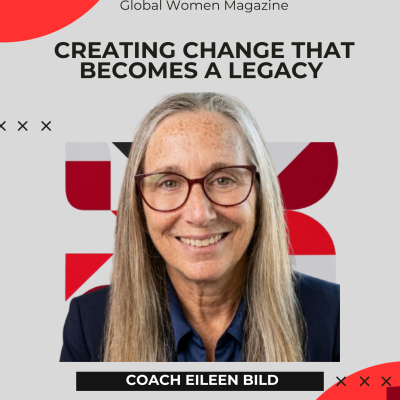
By Eileen Bild
People often mistake power for a negative force, viewing it purely through the lens of status, authority, title, or control. The ultimate test of power is not how many serve under us, but how many stand stronger because of us. For women who want to make a lasting difference, personal power is the ability to turn conviction into action, transform vision into structure, and use influence in positive ways to elevate people, organizations, and communities.
Women are stepping into increasingly visible roles in business, media, education, wellness, public service, and social impact. Visibility brings responsibility alongside opportunity. A leadership position may hand a woman authority, but her leadership style defines her impact. Leadership with lasting value requires more than ambition. It asks us to know what we stand for, speak when our voices are needed, make thoughtful and confident decisions, and build systems that will carry a mission forward, even when conditions change.
This is where my three C’s, Confidence, Courage, and Clarity, become essential. Together, they form a foundation for women who are ready not only to take their place in positions of power, but to use that power with purpose. They help women move beyond hesitation, navigate complexity, and create a legacy that reflects their deepest values.
Confidence: Owning the Right to Lead
Confidence is not the belief that we know everything. It is the inner assurance that we can learn, adapt, contribute, and make meaningful decisions. A confident woman does not need to diminish others to validate her own strength. She understands that leadership is not a competition for worthiness. It is an opportunity to bring her experience, perspective, intuition, and intelligence to the table.
Women in power make a difference when they stop asking for permission to possess the wisdom their lives have already taught them. Their lived experiences, including adversity, caregiving, career challenges, reinvention, entrepreneurship, and personal transformation, can become sources of insight rather than reasons to remain in the background. When a woman recognizes the value of her voice, she becomes more willing to advocate for ideas, people, and policies that might otherwise be overlooked.
Courage: Moving from Conviction to Action
If confidence says, “I am capable,” courage says, “I will act.” Courage is required whenever meaningful change challenges an established pattern. It takes courage to question a policy that no longer serves people, confront an unhealthy workplace culture, safeguard brand integrity, reject a profitable opportunity that violates core values, or stand beside those whose voices have been ignored.
Courage is not the absence of fear. It is a decision when the purpose is greater than the discomfort. Women who create lasting change understand that silence is also a choice and that avoiding a difficult decision can carry consequences of its own. They are willing to enter conversations where the outcome is not guaranteed because progress depends on someone being willing to begin and keeping an eye on the intended outcome.
This does not mean courage is reckless. Effective courage is thoughtful, informed, and connected to a larger vision. It asks: What is at stake? Who will be affected? What truth needs to be spoken? What action will move us toward a healthier and more sustainable future?
Clarity: Knowing What Must Guide the Decision
Confidence and courage are powerful, but clarity gives them direction. Without clarity, confidence can become performance and courage can become reaction. Clarity connects action to purpose.
A woman leading with clarity knows her values, her mission, and the impact she wants to create. She can distinguish between an attractive opportunity and an aligned opportunity. She understands that every “yes” carries a commitment and every “no” protects something important. Clarity allows her to focus resources, communicate expectations, and make decisions that support both immediate needs and long-term goals.
Clarity is most important when pressure increases. Leaders are constantly surrounded by competing opinions, urgent requests, changing information, and outside expectations. Without an internal compass, it is easy to become reactive. Clarity provides a point of return: What do we stand for? Who do we serve? What outcome are we building toward? What decision best reflects our values and responsibilities?
Policy: Turning Values into a Living Structure
Power becomes sustainable when policy supports it. In business, policy is sometimes treated as paperwork or restriction, but strong policy is a form of organizational strength. It translates values into consistent action. It establishes how decisions are made, how people are treated, how risks are managed, and how the business responds when circumstances change.
A company may say it values integrity, excellence, or employee well-being. Policy turns those words into action. Hiring practices, communication standards, financial controls, conflict-resolution procedures, privacy protections, ethical guidelines, crisis plans, and leadership accountability all demonstrate whether stated values are operational or merely aspirational.
Well-designed policies help a business thrive through stability and shared understanding. Team members are better equipped to act when roles, responsibilities, and boundaries are clear, and they feel valued. Customers and partners gain confidence when an organization behaves consistently. Leaders make stronger decisions when agreed-upon principles guide them rather than relying only on personalities or momentary pressure.
Policy also helps businesses survive. Markets shift, technology advances, customer expectations evolve, teams become distributed, and economic conditions change. New risks will emerge. A resilient business cannot depend on “the way we have always done it.” Its policies must be strong enough to protect the organization and flexible enough to respond to new realities.
The best policies are not static documents stored away and forgotten. They are reviewed, communicated, practiced, and improved. They preserve what is essential while allowing methods to evolve. Women in leadership can be especially powerful in this area because many bring an integrated awareness of both outcomes and human impact. They ask not only, “Will this help the business perform?” but also, “How will this affect the people involved, and is it consistent with who we say we are?”
Global Influence: Building Bridges Beyond Borders
Today, influence is no longer limited by geography. A story, idea, program, business, interview, or creative work can cross borders with the click of a button. This reach creates an extraordinary opportunity for women to learn from one another, amplify meaningful work, and build relationships across cultures and industries.
Global influence, however, is not simply about gaining a larger audience. True influence inspires and encourages a unifying environment for success. It recognizes that collaboration can accomplish what isolation cannot. It invites diverse perspectives while identifying shared human values: dignity, opportunity, safety, creativity, health, belonging, and hope.
A unifying environment does not require everyone to think alike. Unity is not uniformity. It is the willingness to respect differences, listen with curiosity, and work toward outcomes that allow more people to flourish. Women with global influence can help shift conversations away from division and toward possibility. They can create platforms where voices are heard, partnerships are formed, and solutions are strengthened through collective wisdom.
When women across nations, professions, and generations support one another, success becomes expansive rather than exclusive. One woman’s advancement can open a door. Her advocacy can widen that door, her policies can keep it open, and her mentorship can prepare others to walk through it. This is how individual influence becomes collective progress.
From Leadership to Legacy
Legacy is not reserved for the end of a career or life. We create it through the decisions we make every day. It lives in the standards we establish, the people we encourage, the truth we are willing to speak, and the systems we leave stronger than we found them.
A lasting legacy is not merely what a woman achieves. It is what her leadership makes possible for others. It can be found in a business culture that continues to honor people, a policy that protects future generations, a platform that gives visibility to unheard voices, or a courageous decision that changes the direction of an organization or community.
To build that kind of legacy, women must bring the three C’s together. Confidence enables us to claim our voice and authority. Courage moves us to act on what we know is right. Clarity keeps our actions aligned with our purpose. Policy then gives those values structure, and global influence extends their reach.
Power at its highest level is not about standing above others or using control to get what you want. It is about standing firmly in who we are while creating pathways for others to rise. When women lead from that understanding, they do more than respond to change; they help shape it. They build businesses that can thrive through uncertainty, communities connected by shared purpose, and a global culture in which success is strengthened through unity.
The question for every woman in a position of influence is not simply, “How much power do I have?” The deeper question is, “What will become possible because of how I use it?”
Our answer becomes our impact, and repeated actions become our reputation. What we are courageous enough to protect, strengthen, and pass forward becomes our personal legacy.

Similar Deep Dives
The Non-Traditional Architecture of Power