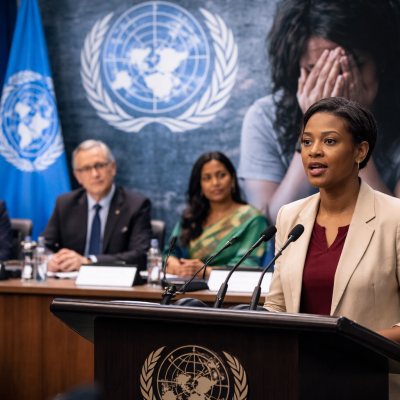


When Major Swathi Shanthakumar stepped forward to receive the UN Secretary-General’s Award for Gender Equality in Peacekeeping 2025, the applause inside the hall was loud, but it paled in comparison to the quieter victories that earned her that moment.
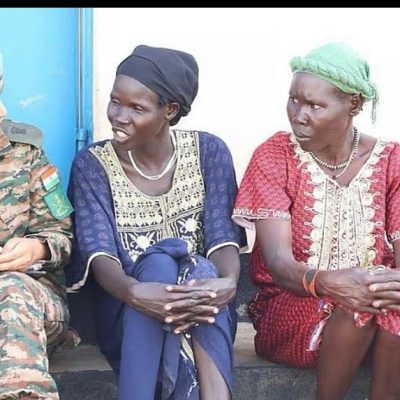
Serving with the United Nations Mission in South Sudan (UNMISS), Major Shanthakumar has been recognized for her gender-focused peacekeeping leadership, particularly her work in strengthening women’s community engagement, protection, and participation in local security structures. In a region marked by prolonged conflict and fragile trust between civilians and armed forces, her approach has been both strategic and deeply human.
Rather than viewing security solely through patrols and checkpoints, Major Shanthakumar focused on women as central stakeholders in peacebuilding. She led initiatives that created safe channels for women to report violence, supported dialogue between female community leaders and security forces, and helped ensure that women’s perspectives were integrated into protection strategies. The result was not just improved reporting or participation, but a visible increase in community trust—often the most elusive currency in post-conflict zones.
UN officials noted that her leadership demonstrated how gender-responsive peacekeeping can produce measurable security outcomes, not symbolic gestures. In areas where women had previously remained silent out of fear or exclusion, engagement increased. Intelligence improved. Early warning systems became more effective. Peacekeeping, in short, became smarter.
What struck me most while reporting on this story is how quietly radical Major Shanthakumar’s work is. In global conversations, we often speak about “including women” as if it is an act of goodwill. On the ground in South Sudan, her work shows something far more pragmatic: security fails when women are ignored. This is not ideology; it is operational reality.
As an Indian peacekeeper operating thousands of miles from home, Major Shanthakumar also represents a broader shift in global military and security leadership—one where authority is no longer defined by distance from communities, but by proximity to their lived realities. Her recognition signals not only personal excellence, but an evolving UN doctrine that understands peace as something built with people, not imposed upon them.
In a world where women’s contributions to security are still too often framed as “soft,” Major Swathi Shanthakumar’s award delivers a firmer message: gender-responsive leadership is not an add-on to peacekeeping; it is a force multiplier.
For the women of South Sudan whose voices were finally heard, and for the global women watching from afar, this award marks more than a career milestone. It marks a recalibration of power—one conversation, one community, one courageous leader at a time.

Similar Deep Dives

From Charisma to Structure: Rethinking What Leadership Really Means
FOR IMMEDIATE RELEASE