




Years ago I sat in a room at a Microsoft partner conference and heard a senior person say, with real pride, that without about twenty people the company wouldn’t be Microsoft. Everyone nodded. It sounded like a compliment, and I think it was meant as one.
I have turned that line over many times since. (You can tell a lot about a company by what it brags about.) Twenty people carrying one of the largest companies on earth is an extraordinary thing. It is also a strange thing to celebrate. My own suspicion, and I will leave it as a suspicion, is that some of what looked like strength was the same thing that made them slow to the internet and slow to mobile. When a company lives in a small number of heads, it can only move as fast as those heads can turn.
That is a governance problem before it is anything else. And it does not start in the organisational chart. It starts at the board.
Most boards I have watched spend their energy answering one question: is the CEO performing? It is a fair question. It is also the wrong first question. The better one is harder. Does this institution survive the people currently running it? Could it absorb a sudden departure, an acquisition, a handoff to the next generation, without losing the thread of what made it work?
A lot of us confuse a strong leader with a sound institution. They are not the same, and sometimes they are opposites. The stronger the leader, the more the organization tends to arrange itself around that one person, and the more fragile it becomes. (I have seen companies triple in size and still run every meaningful decision through one office. It rarely ends well.)
The board’s real job is not to find the right hero and protect them. It is to make sure the institution is built to work no matter who is in the chair.
When Henry Stewart Talks interviewed me recently, they asked me one of those questions that sounds simple and is not. Who guards the guards?
There is an assumption buried in it. The question takes for granted that the answer is a person, that the job is to find the right guard and, when in doubt, a better one above them. It is the same instinct that keeps us hunting for heroes. Get the selection right, the thinking goes, and the rest takes care of itself.
The trouble is the selection. We are not good at picking people, and the track record says so. We interview badly, we promote our favorites, we mistake confidence for competence, and we are routinely surprised by who works out and who does not. (If picking people were a skill we had mastered, executive turnover would not look the way it does.) A governance model that rests on choosing the right guard, and then guarding that guard, is building on the very thing we keep getting wrong.
You can see where that leads. Appoint someone to watch them, and now you need someone to watch that person, and someone above that one, on up a ladder with no top. It is an infinite regress with a payroll.
I would take the question somewhere else. Spend less effort trying to pick right, and more designing an environment and systems where being right about any one person matters less. Human judgment still matters. It is also fraught, and a sound organization does not stake its survival on one person’s judgment landing well on a given day. That is the shift from selecting people to designing systems. The architect is not choosing this year’s set of trustworthy individuals. They are building the conditions under which good decisions get made, surfaced, and corrected, whether or not any particular person is in the room. The guard becomes the system, not a person one level up.
This does not mean authority disappears. People still decide. It means authority is governed by design rather than by one person’s instinct on a given Tuesday. (Big difference, as it turns out.) Decision rights are visible. Information flows to where the decision lives instead of upward to a bottleneck. Mistakes get caught by the structure, not only by whoever happens to be paying attention.
This is the most important work in front of business right now, and it runs from the boardroom all the way down to the front line.
The goal at every level is the same: an environment that does not depend on one person, or a few, to hold it together. Easier said than done. The forces pulling the other way are real, and mostly invisible, and I will come back to them in a later piece. For now it is enough to name the aim.

I have come to realize that great leaders create organizations that don’t need great leaders
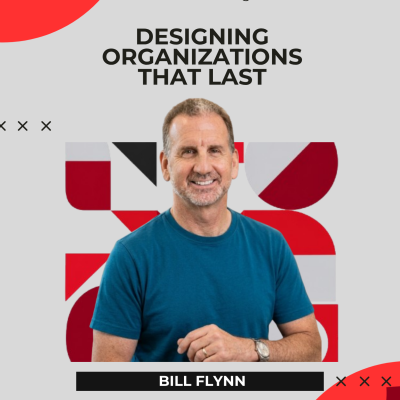
Bill Flynn – CEO at Catalyst Growth Advisors
The best ones I know are not great deciders. They are architects of architects, building people who can build and systems that carry the deciding without routing it back through a single desk.
Microsoft is the cleanest example I know, partly because I once heard them brag about the version that nearly cost them everything.
Bill Gates and Steve Ballmer were brilliant, and they held the reins tightly. Decisions concentrated. The company they built was admirable, and it lived in a small number of heads. Then Satya Nadella took over as CEO in 2014 and did something different. He did not try to be a better version of the previous guards. He changed the environment, the incentives, the way the company decided what to bet on. He built architecture where there had been control.
The numbers are hard to argue with. When Nadella took the chair in early 2014, Microsoft was worth somewhere around 300 billion dollars. A decade later it had crossed 3 trillion, roughly a tenfold rise in the company’s market value. The controllers built a company you could admire. The architect built one that compounds.
That is the whole case for governance as design, in one company’s story.
So here is what I would leave with any board, and with anyone running anything. You may be certain you have empowered your people. Look closely anyway. Is the authority real, governed by a system that holds without you? Or have you simply built a faster, friendlier line that runs straight back to your own desk?
The first is an institution. The second only looks like one. And the difference rarely shows up until the day you are not there.

Similar Deep Dives

How I Learned to Run Operations With AI as My Partner
Why Modern Enterprises Are Built on Trust, Not Attention