


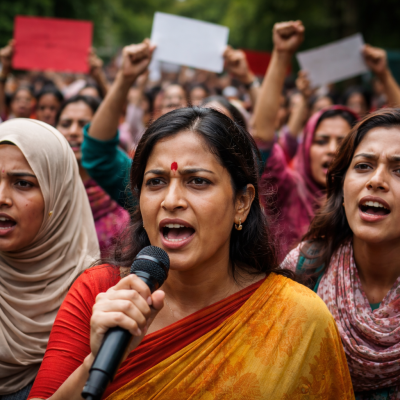
Political debate in Bangladesh has intensified after a senior party figure publicly questioned whether women’s safety has meaningfully improved despite the country’s long history of female prime ministers. The remarks, made in the context of election-season commentary, have ignited widespread discussion about the difference between symbolic leadership and substantive outcomes for women’s lives.
Bangladesh is often cited globally for having women at the highest levels of political office over extended periods. Yet critics argue that this visibility has not consistently translated into everyday safety, legal protection, or systemic equity for women across the country. The recent comments reopened a sensitive national conversation: does female leadership at the top automatically improve conditions for women at the bottom?
Supporters of the critique point to persistent challenges, including gender-based violence, workplace harassment, and gaps in access to justice, as evidence that representation alone is insufficient. Others have pushed back, warning against dismissing the significance of women’s political leadership and arguing that broader social and institutional factors also shape outcomes.
From our perspective, this debate is both uncomfortable and necessary. It forces a reckoning with a truth many countries avoid: representation is not the same as transformation. Women holding power in visible roles can inspire change, but inspiration without institutional redesign often leaves underlying systems untouched.
The danger lies not in questioning outcomes, but in confusing symbolism for impact. When women’s leadership is treated as proof of progress rather than a starting point, institutions are relieved of the responsibility to reform laws, enforcement mechanisms, and cultural norms that directly affect women’s safety.
Bangladesh’s conversation reflects a global pattern. Women leaders are often asked to stand in for structural success, while failures in policy, policing, and justice remain unaddressed. This places an unfair burden on individual women in power and obscures the real work required to protect women collectively.
As elections approach, the question facing voters and policymakers alike is not whether women can lead—they already have—but whether leadership will be measured by outcomes that women can feel in their daily lives. Safety, dignity, and access to justice are not symbolic achievements. They are the true benchmarks of progress.

Similar Deep Dives

Abusers Using AI to Harm and Control Women