



Women in Mining Africa (WiM-Africa) has commemorated the one-year anniversary of the Bilalikoto mine collapse, honoring the women artisanal miners affected by the tragedy and renewing urgent calls for improved safety standards across extractive sectors.
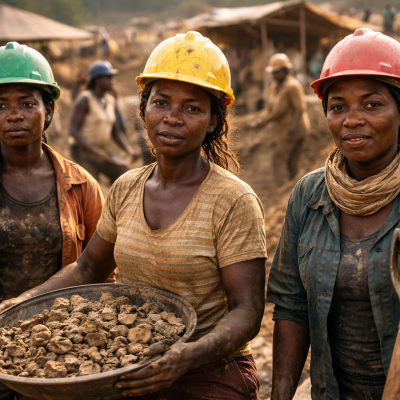
The collapse, which claimed lives and disrupted livelihoods, exposed the precarious conditions under which many women operate in small-scale and artisanal mining. Across several African countries, women are integral to mineral supply chains (working as diggers, processors, transporters, and informal trader) yet they often remain outside formal regulatory protections and financial systems.
At the commemoration, WiM-Africa emphasized that while mining can provide critical income for women supporting families and communities, the sector’s structural vulnerabilities disproportionately affect them. Limited access to capital, inadequate safety training, exclusion from licensing systems, and gender-based discrimination compound economic risk.Industry advocates stressed that formalization and regulation are not merely compliance measures, they are pathways to dignity, safety, and sustainable income for women in extractive economies.
Calls were made for governments, mining corporations, and development partners to invest in gender-responsive safety frameworks, cooperative financing models, and training programs that equip women miners with both technical and entrepreneurial capacity.
The anniversary also served as a moment of solidarity. Survivors and community leaders shared reflections on resilience, underscoring that women are not passive victims within extractive industries—they are economic actors navigating high-risk environments to secure opportunity.
At Global Women Magazine, we see this moment as a critical inflection point.Women’s economic empowerment cannot be separated from workplace safety. When women are pushed into high-risk sectors without structural protection, empowerment becomes exposure.
The Bilalikoto tragedy is a reminder that economic participation without institutional safeguards is incomplete progress.Women miners are contributors to national GDP, local commerce, and global supply chains. Yet their labor often remains informal, undervalued, and invisible. Honoring their resilience must go hand-in-hand with redesigning the systems they operate within.
True economic power is not simply about access to income. It is about security, leverage, and longevity.
As WiM-Africa marks this solemn anniversary, the broader responsibility rests with policymakers and industry leaders to ensure that women’s economic participation in extractive sectors is not defined by risk, but by resilience, regulation, and respect.

Similar Deep Dives

Charlotte Mortlock Resigns from Liberal Party Amid Gender Quota Reversal
Women Leaders Take Center Stage at the 2026 Munich Security Conference