


At the 2026 Munich Security Conference, one message rang clear across diplomatic panels and closed-door strategy sessions: women are not peripheral to global peacebuilding—they are central to it.
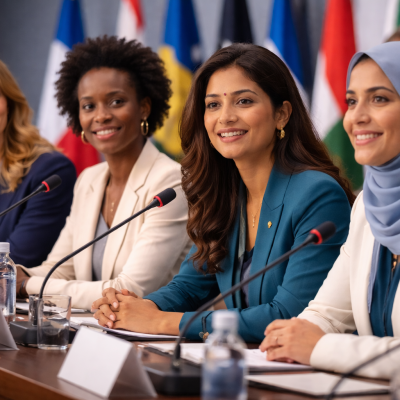
This year’s gathering placed renewed emphasis on the role of women in high-level decision-making, conflict resolution, and international security frameworks. From heads of state and foreign ministers to security analysts and civil society leaders, women were not merely participants—they were agenda setters.
Discussions underscored mounting global evidence that peace agreements are more durable when women are involved in negotiation and implementation. Panels addressed the intersections of climate security, economic instability, armed conflict, and digital warfare—all areas where women leaders are increasingly shaping policy responses.
Speakers emphasized that inclusive diplomacy is not symbolic representation; it is strategic necessity. As geopolitical tensions intensify across regions, governments and multilateral institutions are recognizing that security architecture designed without women’s perspectives often fails to account for community-level realities, humanitarian implications, and long-term societal rebuilding.
While progress is visible, disparities remain. Women continue to be underrepresented in top defense portfolios and formal peace negotiation teams worldwide. The spotlight at Munich therefore served both as celebration and call to action.
Our Perspective at Global Women Magazine
From where we stand, this moment is not just about conference panels—it is about power recalibration.
For decades, global security spaces have been framed as masculine strongholds: strategy rooms dominated by military language and hierarchical command structures. Yet history continues to demonstrate that sustainable peace is not secured solely by force—it is negotiated through systems thinking, social insight, and long-term economic stabilization. These are areas where women leaders have consistently delivered measurable impact.
When women occupy diplomatic tables, conversations shift. Community impact becomes central. Human security becomes inseparable from national security. Economic empowerment becomes recognized as a stabilizing force.
The 2026 Munich Security Conference did more than highlight women in peacebuilding—it reinforced a deeper truth: women are not asking for inclusion in global power structures; they are actively redesigning them.
The task ahead is clear. Spotlight must convert to structure. Visibility must translate into sustained authority. And representation must evolve into institutionalized leadership across every level of global governance.
Peace is not a side conversation for women. It is a domain of leadership—and the world is finally acknowledging it.