




Strategic decision-making at the highest levels of leadership is rarely a function of perfect information.
Contrary to popular belief, the women shaping organizations, industries, and global systems are not operating with complete certainty. What distinguishes them is not access to more data, but the ability to act with clarity in its absence.
Across sectors, from executive leadership and entrepreneurship to hospitality and global talent ecosystems, a pattern emerges: high-level decision-making is structured, intentional, and grounded in a balance between logic, experience, and forward positioning.
This first part of this deep dive explores how women leaders navigate complexity, uncertainty, and consequence. Not by eliminating risk, but by designing how they engage with it.
Clarity Over Certainty
One of the most consistent themes among high-level leaders is the rejection of certainty as a prerequisite for action.
As Michelle Coulson, founder of Remote Rebellion, reflects, the most defining decision in her career was made without the reassurance of a clear path:
“The best decisions rarely come with certainty. They come with clarity.”
Faced with the choice to remain in a traditional career structure or move towards an emerging future of remote work, her decision was not supported by data, stability, or guarantees. Instead, it was anchored in a forward-looking perspective, and an understanding of where systems were heading, rather than where they currently stood.
Her approach introduces a critical shift in how decisions are evaluated. Instead of asking whether an outcome is guaranteed, she frames the decision through three questions:
Is this decision reversible?
What is the cost of not deciding?
What would I do if I knew I could not fail?
This reframing moves decision-making away from fear-based hesitation towards strategic positioning.
Frameworks Before Pressure
While clarity drives action, structure sustains it.
At the executive level, decision-making is rarely improvised in the moment. Instead, it is built on pre-existing frameworks that guide thinking under pressure.
According to insights from Stratos Coaching, leaders who consistently make strong strategic decisions are not those with the most data, but those with the most defined approach:
“The leaders who make the best strategic decisions aren’t the ones with the most data, they’re the ones with the clearest decision-making framework before pressure hits.”
This concept (described as structured intuition) reflects a disciplined balance between analysis and instinct. Rather than reacting to urgency, leaders define key variables in advance:
Whether a decision is reversible or irreversible
Which factors will matter most over time
How instinct aligns with long-term impact
This allows decisions to be made with both speed and precision. Crucially, it also challenges a common misconception in leadership: speed is not the same as decisiveness.
A delayed decision without structure often produces weaker outcomes than a timely decision guided by a clear framework.
The Discipline of Recalibration
Strategic leadership is not only about making decisions, it is about knowing when to change them.
For Sandra Myers, building a company required confronting the limitations of overplanning.

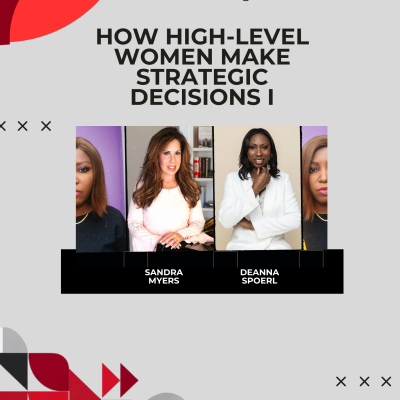
Contributor: Sandra Myers, Co-Founder & President at Select Date Society
Early assumptions about service structure and growth direction began to conflict with real-world demand, particularly as higher-level clients entered the business.
The turning point was not a new opportunity, but a willingness to adjust:
“A plan is a roadmap, not a set-in-stone structure.”
This insight highlights a critical discipline among high-level leaders: responsiveness.
Rather than adhering rigidly to initial strategies, effective leaders maintain flexibility, allowing emerging signals to reshape direction. In practice, this often requires: re-evaluating systems, upgrading capabilities, and aligning offerings with evolving expectations.
The ability to recalibrate (without losing strategic intent) becomes a defining factor in long-term success.
Grounding Decisions in Reality
While frameworks and foresight are essential, high-level decision-making remains deeply connected to context.
In operational environments, where decisions directly affect people, experience, and delivery, leaders must integrate both data and proximity.
As Andrea Durre, Hotel Manager at Nômade Tulum, explains:
“High-stakes decisions require both structure and sensitivity.”
Her approach anchors decisions across three dimensions: clarity of purpose, real-time insight from those closest to the situation, and long-term impact on people and systems.
This emphasis on proximity (speaking directly with teams on the ground) introduces a layer of insight that data alone cannot provide.
In redefining guest experience within her organization, the decision was not isolated to strategy, but extended across processes, teams, and identity.
The result was not only operational improvement, but a strengthening of the organization’s positioning.
Risk, Trade-Off, and Personal Threshold
At the core of every strategic decision lies a fundamental question: what is at stake?
For many leaders, the ability to navigate high-stakes decisions comes down to a clear understanding of personal and organizational thresholds for risk.

Contributor: DeAnna Spoerl, Chief Brand Officer at Bear Icebox Communications
One contributor, DeAnna Spoerl, frames this through a series of grounding questions:
Is a short-term loss acceptable for long-term gain?
What level of discomfort are you prepared to sustain?
What are you willing to risk if this decision goes wrong?
These questions shift decision-making from abstract analysis to tangible consequence.
Equally important is the counterbalance she introduces:
“What if this is the right decision and everything works out?”
This reframing expands the decision space, allowing leaders to consider not only downside risk, but unrealized potential.
Beyond Decision-Making
What emerges across these perspectives is a clear pattern: High-level women do not wait for certainty.
They do not rely solely on data, and they do not operate without structure.
Instead, they build: clarity before action, frameworks before pressure, flexibility within strategy, and proximity to real-world impact.
Strategic decision-making, at this level, is not reactive. It is designed.
As leadership environments grow more complex and less predictable, the ability to make high-stakes decisions becomes less about control and more about orientation; understanding where to move, why it matters, and what trade-offs are required.
This is not a process of eliminating uncertainty.It is a process of leading through it.

Similar Deep Dives

From Survival to Strength
Sima Bahous: Designing Global Change for Women