





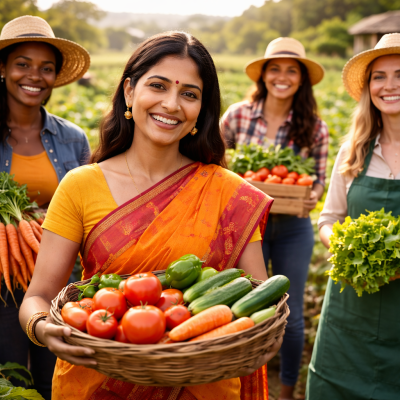
Global policymakers are increasingly highlighting the critical role of women farmers in ensuring food security, sustaining rural economies, and driving climate resilience. Despite being the backbone of agricultural production in many countries, women have historically faced systemic barriers in accessing land, credit, technology, and markets—limitations that threaten both productivity and economic stability.
Recent initiatives from organizations like the FAO, UN Women, and regional development agencies emphasize that supporting women farmers is not only a gender issue but a strategic economic and food security imperative. Policies now advocate for equitable access to land ownership, extension services, financial instruments, and climate-smart agriculture programs designed specifically for women.
Research underscores the impact: studies show that when women control resources and participate in agricultural decision-making, crop yields increase, food diversity improves, and household nutrition rises. Yet globally, women still receive only a fraction of the agricultural extension services and financing afforded to men, highlighting persistent structural gaps.
From our perspective at Global Women Magazine, this policy shift is overdue but essential. For decades, women farmers have carried both the labor and risk of feeding communities, often with little recognition or institutional support. Elevating their role in policy, finance, and leadership within agriculture is not charity—it is practical economic strategy.
Supporting women farmers strengthens food systems, stabilizes economies, and builds resilience against climate shocks. It also sends a clear message: empowerment in agriculture is empowerment for the world. When women thrive on farms, communities thrive, and nations grow more resilient.

Similar Deep Dives

West Bengal Expands Direct Payouts to Women Ahead of Elections