





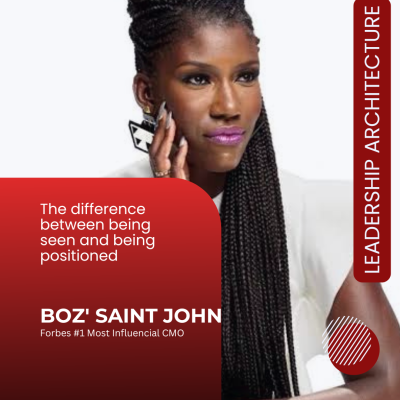
The difference between being seen and being positioned
Visibility has become one of the most sought-after currencies in modern leadership.
Be visible.
Be heard.
Be present.
Across industries, professionals are encouraged to build platforms, share insights, and stay consistently in the public eye. And to a certain extent, this works. Visibility creates access. It opens doors. It introduces opportunities.
But in competitive environments (where power, decision-making, and influence determine outcomes) visibility alone is not enough.
Because visibility is not authority.And the gap between the two is where many leaders stall.
The Illusion of Visibility
Visibility is often mistaken for influence.A leader may be:widely recognized, frequently invited into conversations, and consistently present across platforms.
Yet still lack the ability to shape decisions, control outcomes, or direct strategy.
This is the illusion.Visibility creates the appearance of leadership.
Authority determines its reality.
Without authority, visibility becomes performative, a cycle of being seen without being positioned to act
Positioning vs Presence
The difference between visibility and authority lies in positioning.Presence is about being noticed.Positioning is about being placed (strategically) within systems where decisions are made.
Positioning answers questions visibility cannot:What do you control?
What decisions do you influence?Where do you sit within the structure of power?
A visible leader without positioning may be heard.A positioned leader shapes direction.
The Architecture of Authority
Authority is not assigned randomly. It is built (deliberately) through a combination of:demonstrated expertise, strategic alignment with high-impact initiatives, proximity to decision-making environments and the ability to deliver outcomes consistently.
This is where leadership architecture becomes critical.Leaders who understand this do not chase visibility.
They build structures that place them at the center of value creation and decision flow.
The Case of Strategic Visibility
The career of Bozoma Saint John offers a compelling example of how visibility and authority can intersect, when properly aligned. Known for her bold presence and distinctive voice, she is undeniably visible. But her impact has not come from visibility alone.
It has come from where that visibility is anchored.
Across roles at major global companies, her influence has been tied to:leading brand transformation initiatives, shaping marketing strategy at executive levels, and driving cultural positioning for global organizations.
Her visibility is not separate from her authority.
It is a byproduct of it.
This distinction is critical.Visibility that emerges from authority reinforces leadership.Visibility without it dilutes perception over time.
The Risk of Being “Known” Without Power
In highly competitive environments, being known without authority can become a liability.
It creates: heightened expectations without control, exposure without influence, and recognition without decision-making power.
Over time, this leads to a disconnect between perception and reality.
Leaders may be invited into conversations but excluded from decisions.
They may be recognized publicly but overlooked strategically.
This is where many careers plateau.Not because of a lack of talent — but because visibility has not been converted into positioning.
Building Authority Intentionally
High-level leaders do not leave authority to chance. They build it intentionally.
This involves:
1. Anchoring Visibility in Value
Visibility must be tied to what you do, not just how you appear.
What problems do you solve?
What outcomes do you drive?
Authority grows from contribution, not attention.
2. Moving Closer to Decision Environments
Authority increases with proximity to power.
This means positioning oneself: within strategic initiatives, in rooms where decisions are made, and alongside those who control resources and direction
3. Owning Outcomes, Not Just Ideas
Ideas create visibility.
Execution creates authority.
Leaders who consistently deliver results become indispensable to decision-making processes.
4. Aligning With High-Impact Work
Not all work creates authority.
High-level leaders focus on: initiatives that shape direction, projects that influence growth, and roles that carry measurable impact
Because authority is built where stakes are highest.
Reframing Leadership in Competitive Spaces
In environments where competition is intense and visibility is widespread, the leaders who stand out are not those who are most seen.
They are the ones who are most strategically positioned.
This requires a shift in focus: From:being recognized, To:being relied upon. From:being visible, To:being essential.
Closing
Visibility can open doors.
But only authority determines what happens after those doors open.
The leadership architecture demonstrated by Bozoma Saint John reflects a critical understanding: Being seen is not the goal. Being positioned is.
Because in the end, leadership is not measured by how many people notice you. It is measured by: what you influence, what you control, and what changes because you were in the room. And that is the difference between visibility and authority.

Similar Deep Dives

Sima Bahous: Designing Global Change for Women
African Women Leadership Called to Systemic Impact