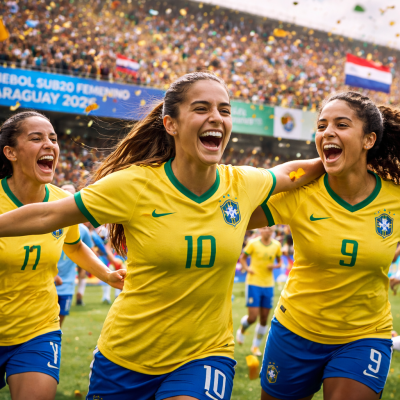


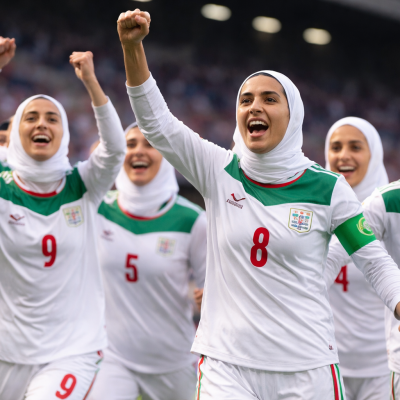
The Iran women’s national football team continues its campaign at the AFC Women’s Asian Cup under heightened political tension and scrutiny, competing while facing reported state pressure and close monitoring during the tournament.
The team’s participation comes at a moment of intensified domestic strain, placing women athletes at the intersection of sport and national politics. Observers note that female athletes from Iran have long navigated a complex environment shaped by regulatory controls, dress requirements, and public visibility restrictions — dynamics that often extend beyond the pitch.
Despite these pressures, the squad has remained focused on competition, advancing through scheduled fixtures and maintaining tactical discipline on the field. Coaches and analysts describe the team’s performance as composed and strategically measured, even as broader geopolitical realities follow them abroad.
International tournaments such as the Asian Cup serve not only as sporting contests but also as platforms of representation. For the Iranian women’s team, visibility on this stage carries symbolic weight. Participation alone reflects years of incremental progress in women’s sport within the country — progress that has often unfolded amid negotiation, advocacy, and institutional constraint.
Athletes have not publicly centered political commentary during the tournament, instead projecting unity and competitive resolve. However, regional media coverage underscores the significance of their presence, particularly as global attention remains fixed on gender rights issues inside Iran.
As the tournament continues, the team’s trajectory will be measured not only in goals and standings but in endurance — a demonstration that elite women’s sport persists even under pressure.
Global Women Magazine Perspective
Women’s sport is never merely athletic. It is infrastructural.
When national teams compete under scrutiny, the field becomes a stage where governance, identity, and gender policy intersect.
The Iranian women’s team’s participation this week underscores a broader truth: access to competition is itself a form of structural visibility. And visibility, when sustained, reshapes institutions over time.
We will continue to monitor developments at the intersection of sport, sovereignty, and women’s leadership.

Similar Deep Dives
UN Panel Urges Urgent Action on Violence and Gender Crimes